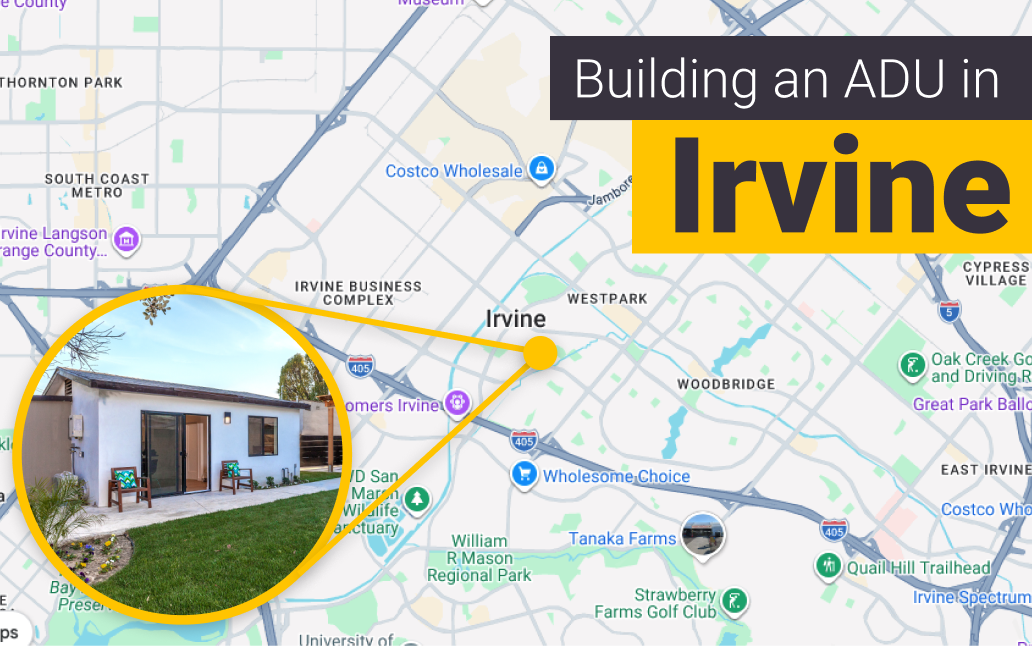
Irvine is one of the most desirable cities in Orange County. Strong schools, master-planned neighborhoods, and consistently high property values make it a prime location for homeowners looking to maximize their investment. As housing demand continues to rise and inventory remains limited, adding an Accessory Dwelling Unit (ADU) has become one of the smartest ways to create additional living space without leaving the neighborhood you love.
With California’s ADU-friendly laws, building an ADU is more accessible than ever, but Irvine still has its own local requirements and permitting process to navigate.
In this guide, we’ll walk you through everything you need to know about building an ADU in Irvine, from regulations to costs to processes.
Or… you can skip the reading and book a call with Maxable for personalized guidance on your Irvine ADU project. We’ll help you understand what’s possible on your property and match you with vetted ADU professionals in your area.
How Much Does It Cost to Build an ADU in Irvine?

In Irvine, ADU projects typically start at around $120,000 for a very basic garage conversion. That would be considered a “bare bones” build; minimal layout changes, standard finishes, and no major structural or utility upgrades. From there, costs increase depending on the scope and complexity of your project.
Detached ADUs generally cost more than garage conversions because they require new foundations, framing, roofing, and utility trenching. Depending on size and design, detached units in Irvine often range significantly higher due to labor costs, material choices, and site conditions.
Several factors influence total cost, including:
- Lot complexity (slopes, access limitations, soil conditions)
- Design layout and square footage
- Structural upgrades or foundation work
- Utility connections and service upgrades
- Chosen finishes, fixtures, and appliances
Beyond construction, homeowners should also budget for soft costs such as architectural design, engineering, permits, school or impact fees (when applicable), and utility connection fees.
It’s also smart to include a 10–15% contingency to account for unforeseen conditions or scope adjustments. Building an ADU is highly customizable, and your budget should reflect both your goals and your property’s constraints.
Step-by-Step Process to Build an ADU in Irvine

Once you have a realistic budget in mind, the next step is understanding what the process actually looks like. Building an ADU in Irvine isn’t just about construction. It’s a structured process that moves through design, permitting, and inspections before you ever get keys in hand.
1. Feasibility Check
Start by confirming your property qualifies. This includes reviewing zoning, lot size, setbacks, utility access, and any HOA restrictions. A feasibility review helps you understand what type and size of ADU is realistically possible on your lot.
2. Budget Planning
With feasibility confirmed, align your project scope with your budget. This is where many homeowners refine square footage, layout, or finish level before design begins.
3. Design Phase
An ADU architect or designer prepares floor plans, elevations, and technical drawings. Structural engineering and energy compliance documents are typically developed during this phase.
Be extra careful at this phase. Any designer with a pencil can call themselves an ADU designer, but unless they have the experience to back up their claim, you could end up with plans that don’t meet Irvine’s zoning requirements, fail plan check, or require costly revisions later. ADUs are highly technical projects. Setbacks, height limits, fire separation, utility connections, and energy compliance all need to be coordinated correctly from the start.
Skip the risky business and book a call with Maxable to be matched with a vetted ADU designer in your area.

4. Permit Submission with the City of Irvine
Plans are submitted to the city for review. Irvine will check for zoning compliance, building code adherence, and safety standards.
This is also a good time to start vetting general contractors in your area. Good contractors are in high demand, so getting on their books quickly is always good practice. Oh, but Maxable can help you out there too ;) Check your address with us to see if we have a contractor match in your area.
5. Plan Check & Revisions
Most projects receive comments that require clarification or adjustments. Your design team responds to these until approval is granted.
6. Construction
Once permits are issued, construction begins. This phase includes foundation work (if detached), framing, utilities, insulation, drywall, finishes, and inspections at key milestones.
7. Final Inspection & Certificate of Occupancy
After passing final inspections, the city issues a Certificate of Occupancy, meaning your ADU is officially approved for use. Nice!
Understanding this step-by-step process helps set realistic expectations and reduces surprises along the way.
Irvine ADU Regulations: California State Law and What Applies Locally

When you’re building an ADU in Irvine, it’s important to understand that California state ADU laws set the baseline, and cities like Irvine must follow them. While Irvine doesn’t have wildly unique restrictions beyond state requirements, knowing the statewide rules helps you plan with confidence, and ensures your project won’t hit unexpected roadblocks.
Under California ADU law, in Irvine every homeowner is entitled to build at least one ADU of up to 800 square feet that meets basic standards like setbacks and height limits, regardless of floor area ratio or minimum lot size. This means you can’t be blocked from building an 800 sq ft unit just because of coverage or lot size limits.
Cities also can’t impose excessive parking rules (especially near transit), minimum lot sizes, or owner-occupancy requirements for most ADUs.
Some of the most important statewide standards include:
- Minimum ADU size and rights: At least one ADU up to 800 sq ft allowed on most residential lots.
- Setbacks: Side and rear setbacks generally can be no more than 4 ft for qualified ADUs.
- Parking exemptions: No parking required when the ADU is near transit, a garage conversion, or otherwise qualifies.
- No state owner-occupancy mandate: ADUs are typically not subject to owner-occupancy requirements.
- Junior ADUs (JADUs): Up to 500 sq ft inside an existing home.
In Irvine specifically, local guidelines generally align with these standards, including size limits up to about 1,200 sq ft for detached or attached ADUs, 4 ft setbacks, and lenient parking rules that follow the state’s exemptions.
First Step to Building an ADU in Irvine
The difference between a smooth, predictable ADU build and a stressful, budget-blowing one usually comes down to who you have on your team. The right designer and builder will understand Irvine’s permitting process, California ADU law, HOA considerations (if applicable), and how to avoid common delays that cost homeowners time and money.
If you’re serious about building an ADU in Irvine, or even just exploring the idea, the smartest next step is talking to an expert who knows the landscape.
Or you can keep Googling and piecing it together yourself.
But if you’d rather skip the guesswork, book a call with Maxable. We’ll help you understand your property’s potential, walk you through realistic costs, and match you with vetted, licensed, and insured ADU designers and builders in your area so you can move forward with confidence.