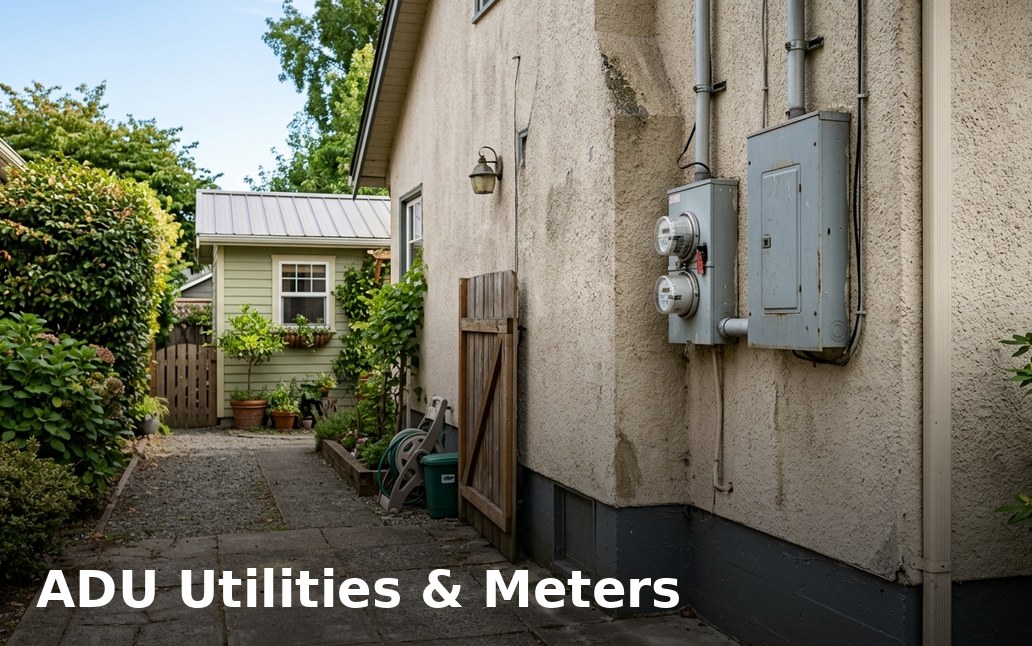
For most ADUs, you can share utilities with the main house, and you’re not legally required to install separate meters. But there are good reasons to separate them, and in some cases your utility company will require it.
The right call depends on whether you plan to rent the unit, your budget, and what your electric provider allows. Getting it right early saves you from an expensive change later.
Here are your options for electric, water, and sewer, when separating is worth the cost, and what it all runs. If you’d rather get answers for your specific property, you can book a call with Maxable and we’ll connect you with vetted local pros.
Does an ADU Legally Need Separate Utilities?
In most cases, no. California doesn’t require an ADU to have its own separate meters, and for attached units and conversions, sharing with the main house is common and allowed.
There’s one important exception: your electric utility may require a separate electric meter for a new detached ADU. Providers set their own rules, and PG&E, for example, requires a separate electric meter for a new detached ADU. State law bars cities from requiring separate utility connections, but utilities set their own service rules, so confirm with your provider before you design.
So the real question usually isn’t “am I required to,” but “should I.” That comes down to how you’ll use the ADU.
Your Three Options for Electric
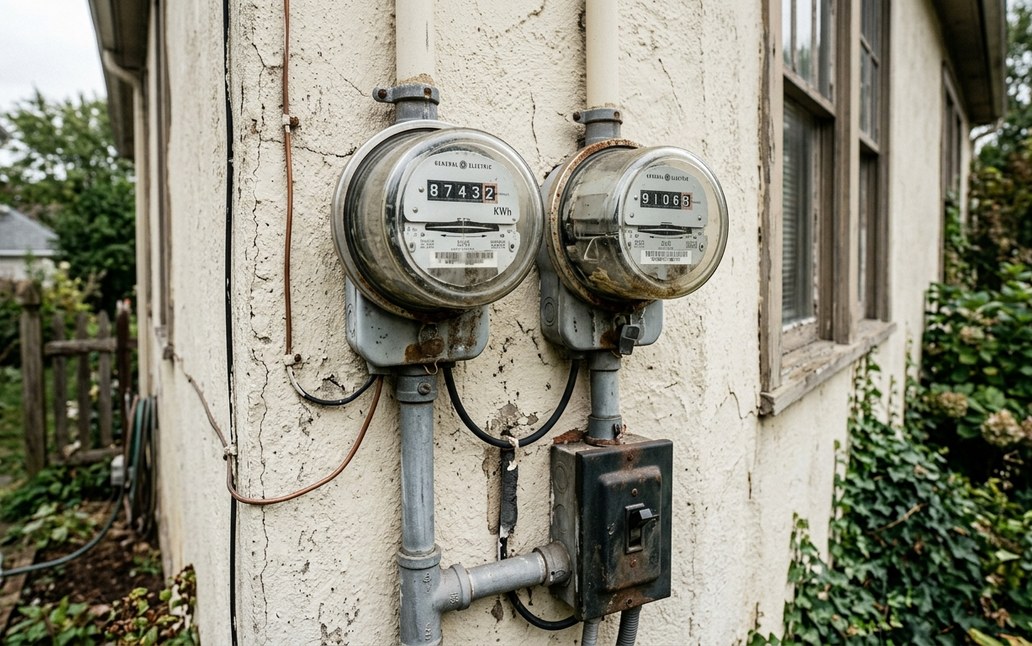
You have three ways to handle power for an ADU, and they trade off cost against convenience:
| Option | What it is | Rough cost |
|---|---|---|
| Separate meter | The ADU gets its own utility account and bill | $4,500 to $9,500 installed |
| Submeter | A private meter that tracks the ADU’s usage on your account | $400 to $1,200 |
| Shared | The ADU runs off the main home’s panel, no separate tracking | $0 (may need a panel upgrade) |
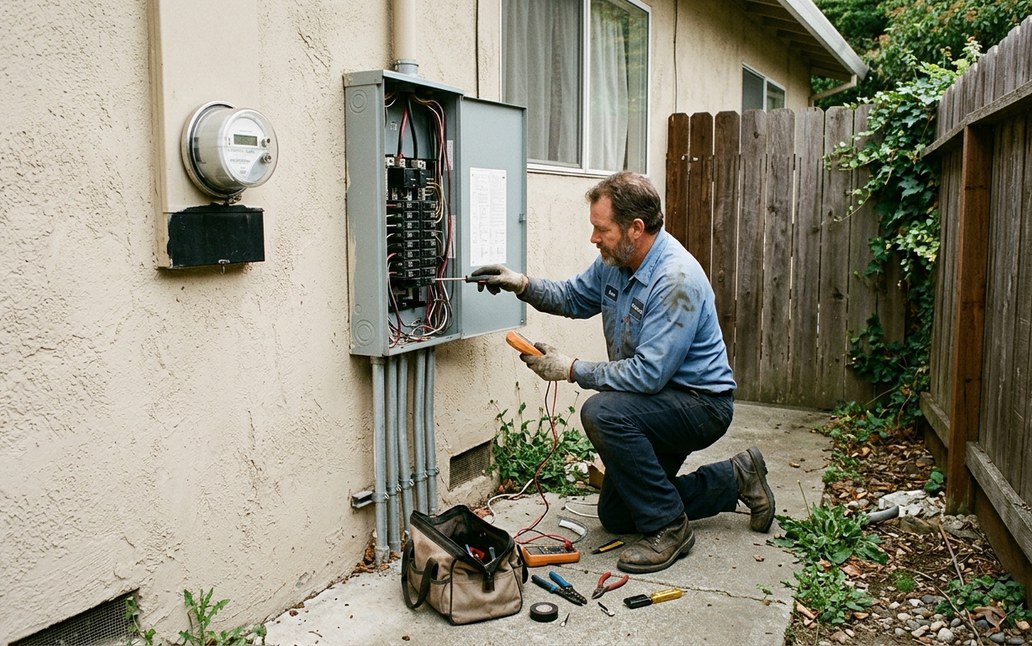
A separate meter is cleanest for a long-term rental, since the tenant gets their own bill directly from the utility. A submeter is a low-cost middle ground that lets you bill a tenant for exactly what they use without a full separate account. Sharing is simplest and cheapest if the ADU is for family or your own use, though you may still need to upgrade your electrical panel to handle the extra load.
Water and Sewer: Share or Separate?
Most ADUs share water and sewer lines with the main house, and that’s usually fine. A separate water meter is rarely required, but it can be worth it if you plan to rent, so a tenant pays for their own water.
Sewer is where the real cost often hides, especially for a detached unit that needs a new line trenched to the main sewer connection. That trenching, not the meter itself, is the expensive part. If you’re thinking about renting or eventually selling the ADU separately under AB 1033, separate connections make that far cleaner.
When Separate Utilities Are Worth It
Separating utilities costs more up front, so it’s worth it in specific situations:
- You’re renting the unit and want the tenant billed directly, which avoids disputes over shared bills
- You may sell or condo-ize the ADU down the road, where separate connections make the split much simpler
- You want clean resale appeal, since a fully independent unit is easier for a future buyer to value as a true separate home
If the ADU is for an aging parent, an adult child, or your own use, sharing is usually the smarter, cheaper choice. Our guide on designing an ADU for rental income covers how this ties into your rental strategy.
What It Costs to Connect a Detached ADU
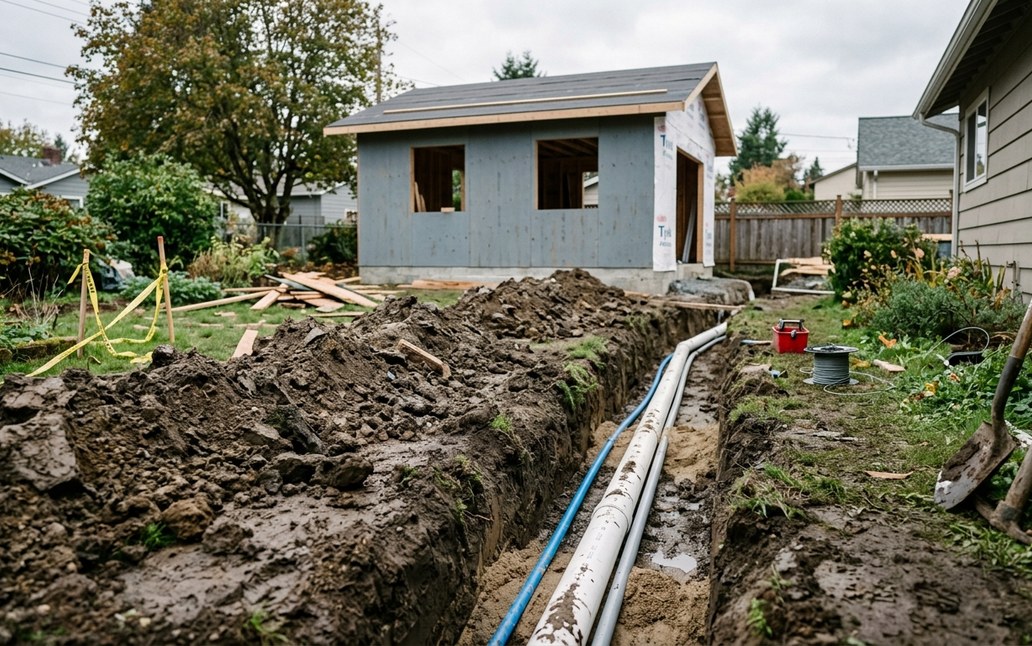
A detached ADU needs its utilities trenched across the yard to reach the unit, and that’s often an underestimated line item. Running new water, sewer, and electric connections commonly adds $8,000 to $30,000, with the sewer line usually the priciest piece because it depends on distance and depth.
An attached ADU or a garage conversion usually costs far less here, since it can tie into existing lines nearby. These connection costs are one of the reasons our breakdown of the hidden costs of an ADU exists, and they’re worth budgeting for from the start. Our cost-to-build guide puts them in context.
Get It Right Before You Build
Utility decisions are much cheaper to make on paper than to change after construction. If you’re weighing whether to separate your ADU’s utilities, book a call with Maxable and we’ll help you think it through and connect you with vetted designers and builders who know your area’s rules.
FAQs
Does an ADU need a separate electric meter?
Not by state law, but your electric utility can. PG&E, for example, requires a separate electric meter for a new detached ADU. Confirm the rule with your provider before designing.
Can an ADU share utilities with the main house?
Yes. Most ADUs, especially attached units and conversions, share water, sewer, and electric with the main home. Sharing is the simplest and cheapest option if the unit is for family or your own use.
How much does it cost to add a separate meter for an ADU?
A separate electric meter typically runs about $4,500 to $9,500 installed. A submeter is a cheaper middle ground at roughly $400 to $1,200, and sharing the main panel costs nothing beyond a possible panel upgrade.
Do I need separate water and sewer for my ADU?
Usually no. Most ADUs share water and sewer with the main house. Separate connections are worth considering if you plan to rent the unit or may sell it separately later. For a detached unit, trenching new lines is the main cost.
How much do utility connections cost for a detached ADU?
Trenching and connecting new water, sewer, and electric lines for a detached ADU commonly adds $8,000 to $30,000, with the sewer line usually the most expensive part depending on distance and depth.