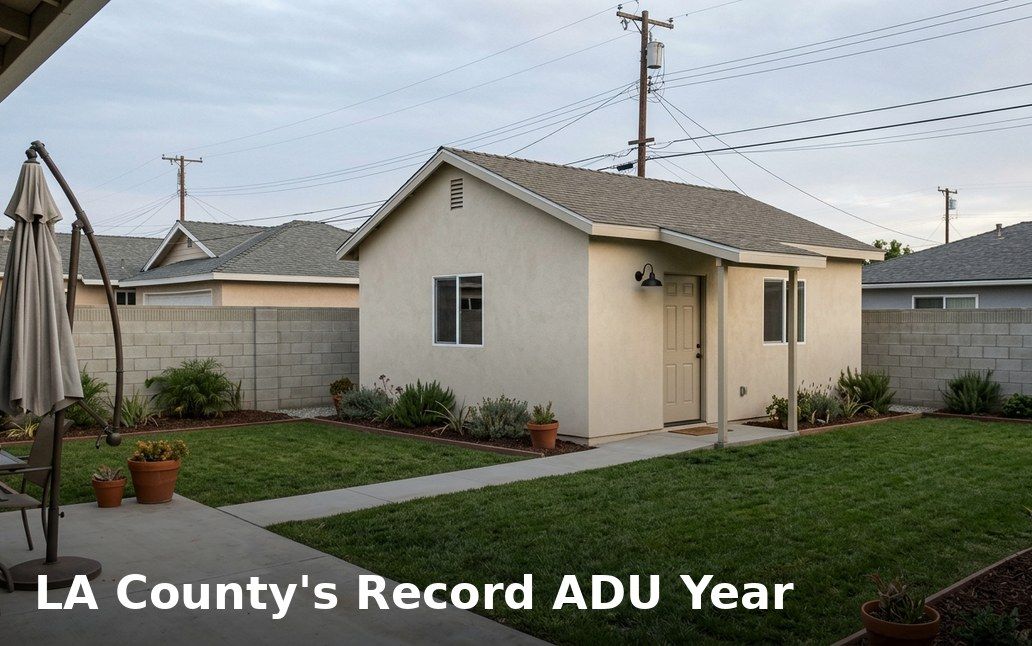
LA County ADUs just had their biggest year ever. A new USC report found that 10,230 ADUs were completed in Los Angeles County in 2025, making up 37% of all new homes, the highest share on record. Then, on September 16, 2026, the Federal Reserve raised interest rates for the first time since 2023.
So which is it? Great time to build, or time to wait? The honest answer depends on how you plan to pay for it. Let’s break it down.
If you’d rather skip the research and get answers specific to your property and budget, you can book a call with Maxable. We’ll talk through your options and connect you with vetted, licensed and insured ADU designers and builders.
Key takeaways
- LA County completed 10,230 ADUs in 2025, 37% of all new homes and a record high (USC Lusk Center, 2026)
- The Fed’s quarter-point hike pushed the prime rate to 7.00%, so most HELOCs and construction loans now cost more
- On a $250,000 ADU, a HELOC costs about $52 more a month, and a new 30-year loan costs about $159 more a month than in February
- The Fed’s own projections show rates holding near this level through 2027, so waiting for a drop is a gamble
- The CalHFA ADU grant is still closed, but a few local LA-area programs are coming
How Many ADUs Were Built in LA County in 2025?
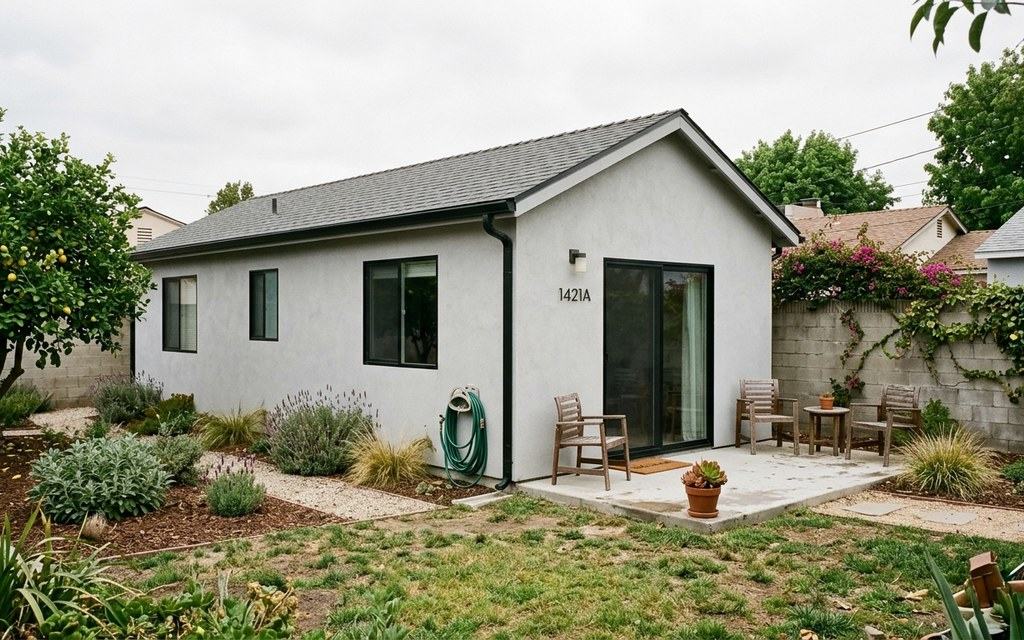
LA County completed 10,230 ADUs in 2025, the most of any year on record. ADUs made up 37% of all new homes in the county, up from just 9.5% in 2018. The numbers come from the 2026 State of Los Angeles County Housing and Neighborhoods report by USC researchers, released in August 2026.
The report tracks every home that gets a certificate of occupancy, which is the city’s official sign-off that a unit is finished and safe to live in. Here’s what stood out:
- 37% of all new homes in LA County in 2025 were ADUs, higher than any other year in the data
- 10,230 ADUs were completed countywide, the highest annual total to date
- In 2018, ADUs were just 9.5% of new homes (1,624 units)
- From 2022 through 2025, ADUs made up about one-third of all new homes, roughly 34,150 units
Think about that for a second. One out of every three new homes in the county over the last four years was an ADU, most of them tucked into a backyard or a converted garage.
The report does add a reality check. Total new housing actually dipped in 2025 to about 27,300 units, down from roughly 28,500 the year before. ADUs are carrying a bigger share of the load, and the county is still far behind the roughly 812,000 homes the state wants permitted by 2029.
Source: USC Lusk Center / Neighborhood Data for Social Change, 2026 SOLACHAN Housing Supply
Why Are So Many LA County Homeowners Building ADUs?
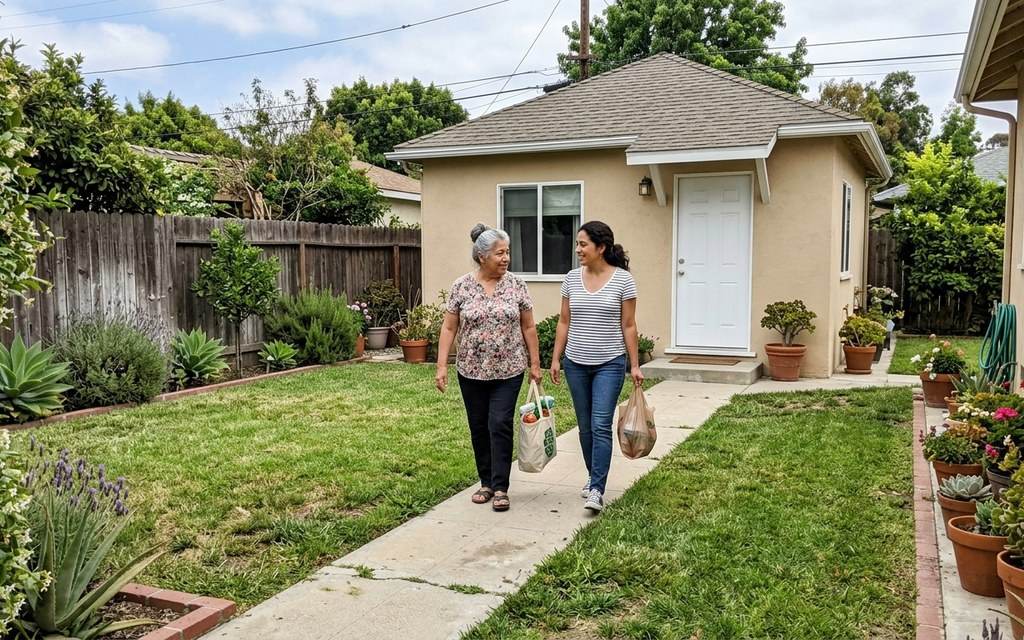
Mostly for family, and for more room. The USC report cites a 2024 study of LA City Council District 3, where 70% of surveyed owners said their main reason for building was to house a family member or close relative, or to get extra living or work space, rather than to rent it out.
That matches what we hear on calls every week. An aging parent who wants to stay close. An adult kid who can’t find a rental they can afford. Rental income is a big motivator too, and our guide to designing an ADU for rental income covers that side.
State law helped a lot, too. California now guarantees most single-family lots the right to build an ADU, caps side and rear setbacks at 4 feet and forces cities to approve compliant plans on a clock. If you want the current rulebook, start with California ADU laws in 2026 and our Los Angeles ADU guide.
One number worth knowing before you start: in the City of LA, ADUs still average almost 18 months from the first permit to move-in day. Our breakdown of how the LA ADU permit process works shows where that time goes, and the timeline matters a lot for the financing question below.
What Did the Fed Do in September 2026?
On September 16, 2026, the Federal Reserve raised its benchmark rate by a quarter point, to a range of 3.75% to 4.00%. It was the first rate hike since 2023. The Fed said inflation “remains elevated,” and its projections point to one more hike before the end of 2026.
Here’s what moved right after, according to the Fed’s statement and Freddie Mac’s weekly mortgage survey:
- The prime rate went from 6.75% to 7.00%. Most HELOCs and many construction loans are priced off prime, so this one hits fastest
- The average 30-year fixed mortgage hit 6.95% on September 17, up from 6.76% the week before and nearly a full point above the 5.98% average in late February
- The Fed’s own projections show rates holding around this level through 2027, not dropping
Here’s the thing: the Fed doesn’t set your mortgage rate directly. But it sets the cost of short-term money, and that flows straight into the loans most homeowners use to build an ADU.
How Does the Rate Hike Affect ADU Financing?
It depends on the loan. Variable-rate options like HELOCs and construction loans got more expensive right away because they follow the prime rate. Cash-out refinances and renovation loans follow 30-year mortgage rates, which were already climbing. Fixed-rate home equity loans, cash and existing fixed mortgages aren’t affected once they’re locked.
Here’s the quick version, using a $250,000 detached ADU as the example (our complete guide to ADU loans puts detached ADUs starting around $240,000 to $275,000 in California, and our California ADU cost breakdown covers the full budget):
| Financing type | Rate type | Effect of the September hike |
|---|---|---|
| HELOC | Variable, tied to prime | About $52 more a month on $250,000, and it can keep rising |
| Construction loan | Often variable during the build | Costs more now, can keep climbing until it converts |
| Cash-out refinance | Follows 30-year mortgage rates | About $159 more a month than in February on $250,000 |
| Renovation loan (HomeStyle, FHA 203(k)) | Follows 30-year mortgage rates | Higher than earlier this year |
| Fixed-rate home equity loan | Fixed | New loans cost more, but the rate is locked for the build |
| Cash or existing fixed mortgage | None | No change |
HELOC (Home Equity Line of Credit)
A HELOC is a revolving line of credit secured by your home’s equity, and it usually has a variable rate tied to prime. When prime went up 0.25%, so did the rate on most HELOCs, including lines people already have open.
On a $250,000 balance, that quarter point adds about $52 a month in interest. Not a dealbreaker by itself. The bigger risk is that a variable rate keeps moving if the Fed hikes again during an 18-month build.
Construction Loans
Construction loans release money in stages as the build hits milestones, and many carry variable rates during construction. Same story as a HELOC: they get pricier now and could keep climbing until the loan converts to a permanent mortgage.
Cash-Out Refinance and Renovation Loans
A cash-out refinance replaces your mortgage with a bigger one and hands you the difference. Renovation loans like the Fannie Mae HomeStyle and FHA 203(k) are priced off longer-term mortgage rates, which were already rising before the Fed moved.
This is where the math stings the most. Borrowing $250,000 over 30 years at 6.95% costs about $1,655 a month, versus about $1,496 at February’s 5.98%. That’s roughly $159 more every month. And if you have a low-rate mortgage from a few years ago, a cash-out refi means giving that rate up on your whole balance, not just the ADU portion.
Fixed-Rate Home Equity Loans
A home equity loan is a lump sum at a fixed rate. New loans cost more now, but once you lock one, the rate won’t change during your build. That predictability is worth a lot when the Fed is signaling more hikes.
Cash, and Your Existing Mortgage
If you’re paying cash, the rate hike doesn’t touch your ADU at all. And if you already have a fixed-rate mortgage, your payment stays exactly the same.
Maxable Pro Tip: Ask any lender whether your rate is fixed or variable during construction and after. Two quotes that look identical on day one can land thousands of dollars apart by move-in day.

Should You Build an ADU Now or Wait for Lower Rates?
For most homeowners, waiting isn’t the safer bet. The Fed’s projections show rates staying near today’s level through 2027, and an ADU takes more than a year to design, permit and build. You can start design and permits now, finance closer to groundbreaking, and refinance later if rates fall.
A few things to weigh before you hit pause:
- ADUs take a long time. With permits, design and construction, you’re often looking at more than a year before you need the full loan amount. Many homeowners use that time to design and permit now, then finance the build closer to groundbreaking.
- You can refinance later. If rates fall after you finish, a refinance can bring your payment down. You can’t go back and get this year’s construction schedule.
- Waiting has its own costs. Every month you wait is a month of rent you’re not collecting, or a month your parent still doesn’t have a place of their own. Construction costs rarely go down while you wait, either.
- The loan type matters more than the headline rate. A fixed-rate home equity loan at a slightly higher rate might beat a cheaper variable HELOC if rates climb again mid-build.
The truth? For most families, the right move is picking the right loan, not waiting for the perfect rate. Our breakdown of 5 hidden ADU costs is a good gut-check on the full budget before you talk to a lender.
What ADU Financing Help Is Still Available in LA County?
Less than a couple of years ago, honestly. The statewide CalHFA ADU grant and the City of LA’s ADU Accelerator are both closed. Two local programs are still worth watching: a 2% loan program in Long Beach and a new LA County fund for homeowners in unincorporated areas.
- CalHFA ADU Grant: closed. The last round was fully allocated in December 2023, and CalHFA warns that anyone offering to get you one is running a scam
- LA ADU Accelerator (City of LA): currently closed to new applications
- Long Beach Backyard Builders, Round 2: loans up to $250,000 at 2% for lower-income Long Beach homeowners, with payments deferred. The application isn’t open yet, but you can join the city’s interest list to get an email when it opens. Our Long Beach ADU regulations guide covers the local rules
- LA County ADU assistance program: $3.8 million approved in March 2026 to help homeowners in unincorporated areas build ADUs, with priority for Eaton Fire survivors. The finished ADU has to stay affordable to middle-income households for at least 10 years, and the county says application details are still to come
If you’re rebuilding after the fires, our guide to building an ADU in Altadena covers what’s different for you.
Planning Your LA County ADU in a Higher-Rate Year
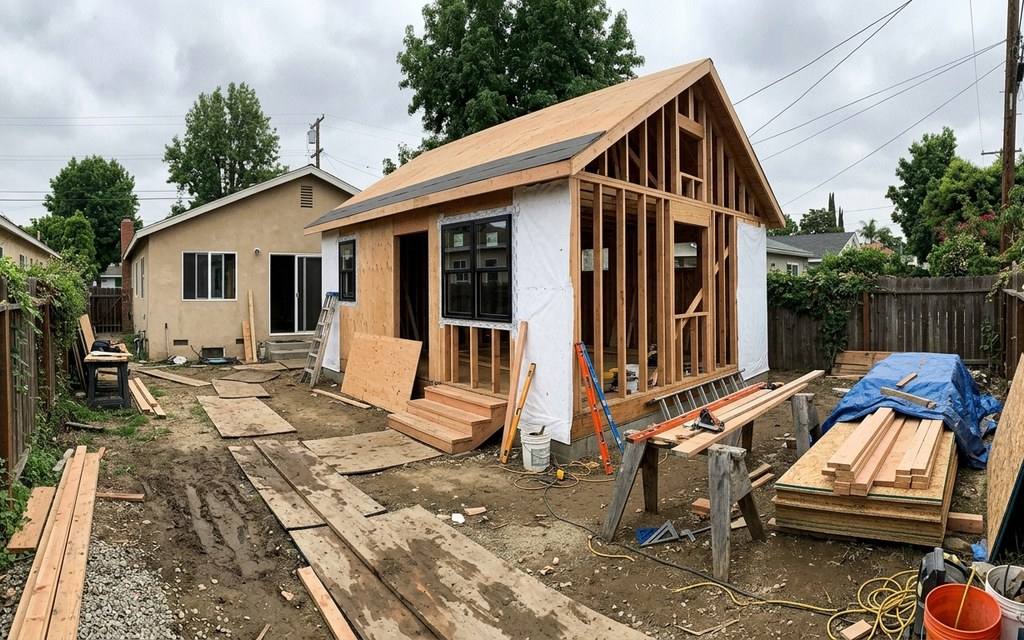
More than 10,000 LA County homeowners finished an ADU last year, and the rate hike doesn’t change why they built. The ones who come out ahead usually get a real budget early and compare loan types, not just rates. They also use the long permitting runway to their advantage instead of waiting on the sidelines.
That’s exactly where we come in. When you book a call with Maxable, we’ll help you figure out what you can build on your lot, and what it’s likely to cost in your city, so you walk into the lender conversation knowing which financing path fits. Then we’ll connect you with vetted, licensed and insured ADU designers and builders who know LA County.
Ready to see what your backyard could be? Book a call with Maxable and let’s map out your ADU.
FAQs
How many ADUs were built in LA County in 2025?
LA County completed 10,230 ADUs in 2025, according to the 2026 State of Los Angeles County Housing and Neighborhoods report from USC. That was 37% of all new homes in the county and the highest share on record.
Should I wait for interest rates to drop before building an ADU?
Usually not. The Federal Reserve’s September 2026 projections show rates holding near current levels through 2027. Because an ADU takes more than a year to design, permit and build, many homeowners start design and permits now, finance closer to construction and refinance later if rates fall.
Did the Fed rate hike affect my HELOC?
Probably. Most HELOCs have a variable rate tied to the prime rate, which rose from 6.75% to 7.00% after the Fed’s September 16, 2026 hike. Check your loan terms to see when your rate adjusts.
How much more does an ADU loan cost after the rate hike?
On a $250,000 HELOC, the quarter-point hike adds about $52 a month in interest. A new 30-year loan for $250,000 at 6.95% costs about $1,655 a month, roughly $159 more than at the 5.98% average in late February 2026.
Is the CalHFA ADU grant available in 2026?
No. The CalHFA ADU Grant Program was fully allocated in December 2023 and has not reopened. Be cautious of anyone who claims they can get you one.
What is the best way to finance an ADU when rates are rising?
Cash avoids interest entirely. Among loans, a fixed-rate home equity loan gives you a predictable payment, while a HELOC or construction loan may start cheaper but can rise if rates keep climbing. The best fit depends on your equity, credit and timeline.