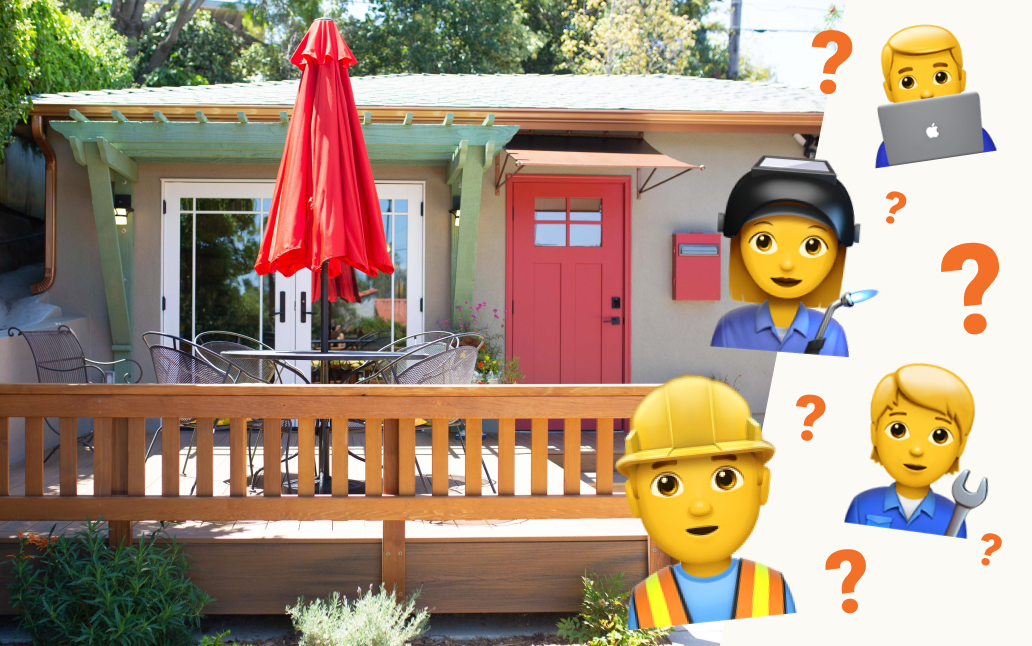
It’s one of the most common questions homeowners ask after seeing the price tag for an ADU: Can I just build it myself?
Between YouTube tutorials, home renovation shows, and a few ambitious friends who’ve remodeled their kitchens, DIY construction can start to feel doable. And in California, you technically can act as an owner-builder on your ADU project.
So yes. It’s possible.
But here’s the bigger question: is it realistic?
Building an ADU isn’t the same as installing new cabinets or retiling a bathroom. It involves inspections, structural engineering, utility coordination, energy compliance, subcontractor scheduling, and strict building code requirements. And don’t get us started on ADU permits.
What looks like a cost-saving shortcut on paper can quickly turn into a full-time job with real financial and legal risk attached.
We’re breaking down what DIYing an ADU actually involves, where homeowners can save money, and when hiring a licensed contractor is the smarter move.
Or… you could skip the trial-and-error phase entirely and book a call with Maxable. We’ll help you understand what’s realistic for your property and match you with vetted, licensed, and insured ADU builders… so you can avoid the DIY headaches before they start.
Is It Legal to DIY an ADU in California?

Short answer: yes. But, with important caveats.
In California, homeowners are allowed to act as an owner-builder, meaning you can pull permits and take responsibility for constructing your own ADU without hiring a licensed general contractor. On paper, that sounds straightforward. You apply for permits, manage the project, hire subcontractors as needed, and oversee construction.
But when you register as an owner-builder, you’re not just taking on the project. You’re taking on the liability.
As the permit holder, you become responsible for code compliance, scheduling inspections, workplace safety, and ensuring that all subcontractors are properly licensed and insured. If a worker gets injured on your property and you don’t have the right coverage in place, you could be financially responsible. You’re also legally responsible for any defects or violations tied to the project.
Some lenders may also hesitate to finance an ADU built under an owner-builder permit, and resale disclosures can become more complicated if the work isn’t thoroughly documented.
So yes, it’s legal. But legality and practicality aren’t the same thing.
What DIYing an ADU Actually Involves

When most homeowners say “DIY,” they don’t mean pouring their own foundation or wiring their own electrical panel. In reality, acting as an owner-builder usually means becoming the project manager for your ADU.
That typically includes:
- Pulling permits and submitting required documentation
- Responding to plan check corrections from the city
- Scheduling and coordinating inspections at each phase
- Hiring and managing subcontractors (framing, plumbing, electrical, HVAC, drywall, roofing, etc.)
- Verifying that all subcontractors are properly licensed and insured
- Ordering materials and tracking deliveries
- Managing job-site logistics and resolving on-the-spot issues
- Keeping the project on schedule and trades moving in the right order
- Ensuring all work complies with California building code
- Passing final inspection and securing a Certificate of Occupancy
When you act as an owner-builder, all of this falls on YOU. Not just physically, but legally and financially as well.
Then there’s budgeting. That also means you’re responsible for:
- Tracking and organizing all invoices
- Managing change orders and cost adjustments
- Monitoring your overall budget in real time
- Making judgment calls when unexpected issues arise
- Deciding where to cut costs and where not to
- Handling payment schedules with subcontractors
Financial oversight becomes a major part of the job. Small decisions can have big consequences if they’re not managed carefully. Even experienced money-savvy homeowners can underestimate how quickly small ADU upgrades can add up.
Cost Comparison: DIY vs. Hiring a Contractor

In today’s market, ADU projects often start around $130,000, even for smaller or simpler builds. That number can feel steep, and it’s exactly why many homeowners start considering the DIY route. If you can eliminate a general contractor’s markup, surely you can save tens of thousands of dollars… right?
Sometimes. But not always.
Where DIY can save money:
- General contractor overhead and profit
- Some labor costs (if you perform work yourself)
- Material markups
Where DIY often ends up costing more:
- Project delays that extend timelines
- Failed inspections and rework
- Improper sequencing of trades
- Ordering mistakes or material waste
- Paying subcontractors premium rates for short-notice scheduling
- Taking unpaid time off work to manage the build
There are also hidden ADU costs many homeowners underestimate: tool purchases, dumpster rentals, delivery fees, insurance coverage, and change orders caused by design adjustments mid-construction.
Hybrid Option: Acting as Owner-Builder With Professional Support

If you REALLY want to DIY, here’s a pro tip: consider a hybrid approach. Hire a licensed contractor to handle the structural work, foundation, framing, roofing, and utility rough-ins; the heavy-duty, code-critical components. Then, once the project is dried-in and inspected, you can take on finish work yourself. Items like tile installation, painting, cabinetry, and hardware are labor-heavy but manageable for many homeowners with patience and time.
This approach reduces risk while still giving you meaningful cost control without gambling the entire structure of your investment.
When DIY-ing Your ADU Makes Sense
Let’s be honest. The only time DIYing an ADU truly makes sense is when the project is relatively straightforward. And even then, “straightforward” is doing a lot of work in that sentence.
If you’re planning a garage conversion, you may have a fighting chance, especially if the structure is in good condition and already has plumbing in place. A garage that already includes a bathroom (or was previously built out with utilities nearby) dramatically reduces complexity. You’re not pouring a new foundation. You’re not building a second story. You’re not trenching long utility lines across your yard.
That said, “easier” does not mean informal. You still need proper permits, approved plans, inspections, and code compliance. Skipping steps or trying to quietly convert the space without permits can create serious issues later, especially during resale or refinancing.
A simple garage conversion with existing infrastructure? Maybe.
Anything beyond that? You’re no longer DIYing a project. You’re running a construction company.
The Smartest Way to Build an ADU?
Building an ADU is a major investment. And while DIY might seem like a way to cut costs, the wrong move can end up being far more expensive in the long run. Between permitting, inspections, trade coordination, and liability, there’s a lot at stake.
If you’re feeling overwhelmed by the numbers or worried about staying within budget, you don’t have to figure it out alone.
Let Maxable help.
We specialize in connecting homeowners with vetted, licensed, and insured ADU designers and builders right in your neighborhood, who understand local regulations and can work within your budget. Instead of guessing what’s realistic, you can get clear answers tailored to your property and your goals.
If cost is your biggest concern, the smartest first step isn’t DIY. It’s clarity.
Book a call with Maxable and let us help you build smarter, not harder.